What to know first
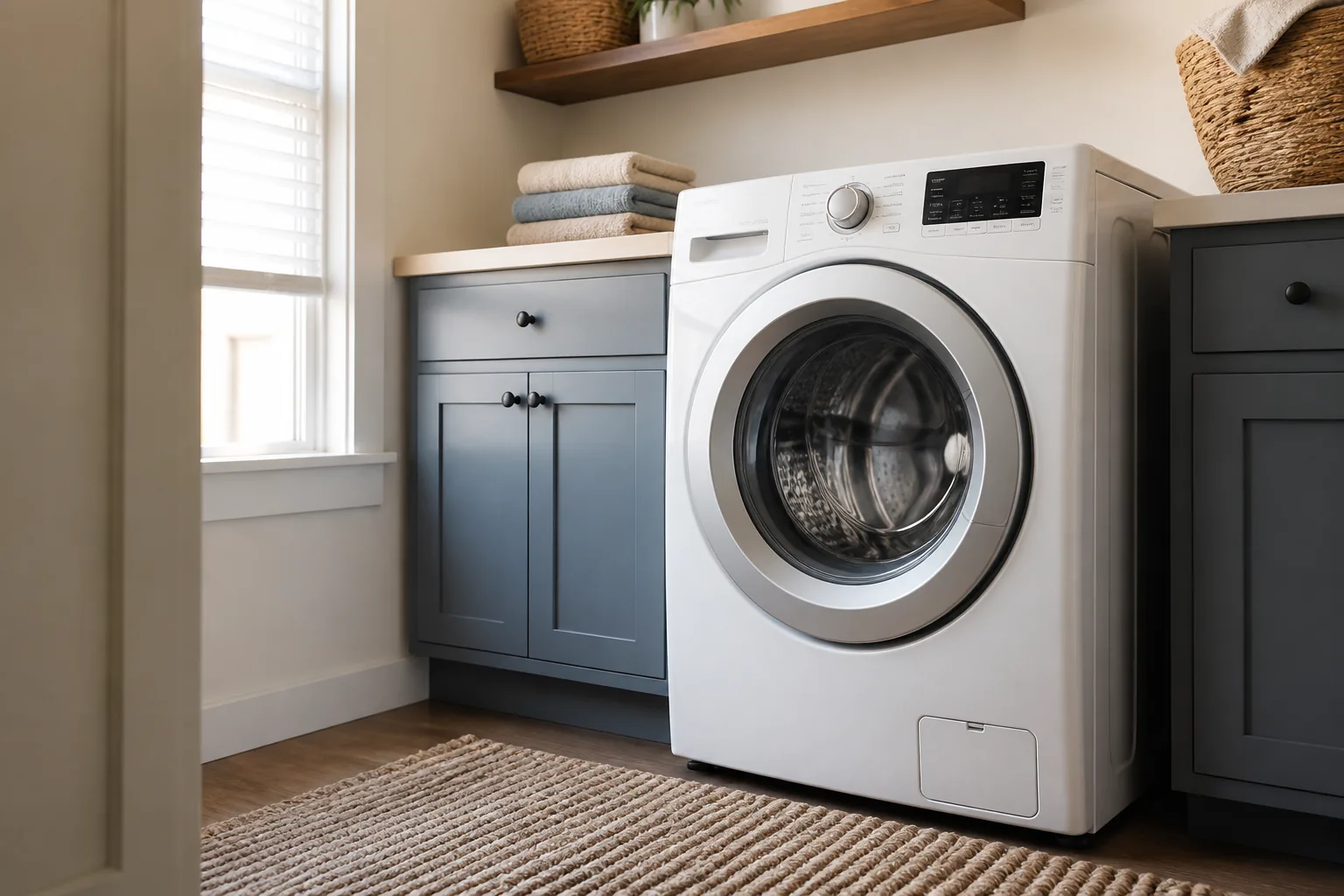
A washer handles water, detergent, weight, and vibration in every load. A few regular checks can reduce odors, catch leaks early, and help the machine drain and spin as designed.
Maintenance cannot correct a failed pump, lock, bearing, motor, valve, or control. Repeated cycle problems need diagnosis rather than another cleaning product or reset.
Safety first
Unplug the washer and close both water valves before moving it or checking a hose connection. Stop using the appliance if it is leaking, scraping, or moving violently during the spin cycle.
Inspect the water hoses
Look for bulges, cracks, corrosion, damp connections, or small drips at the faucets and washer. Replace damaged hoses promptly and follow the hose manufacturer's replacement guidance even when no leak is visible.
Help the washer drain correctly
- Keep the drain hose secure without pushing it too far into the standpipe
- Check an accessible pump filter according to the owner's manual
- Remove items from pockets before loading the washer
- Address standing water, slow draining, or recurring drain errors instead of running repeated cycles
Keep the machine level
A washer that rocks can become noisy and struggle to balance a load. Confirm that all feet remain firmly on the floor. Avoid overloading the tub, and distribute heavy items according to the manufacturer's instructions.
Clean the parts that hold residue
Wipe the door glass, gasket, lid area, and detergent dispenser. Leave the door or lid open when appropriate and safe so moisture can escape. Use the manufacturer's cleaning cycle and an approved cleaner rather than mixing household chemicals.
Need a diagnosis?
RPS Appliance Repair can test the appliance, explain what failed, and provide a flat-rate repair quote before work begins. The $129 trip and diagnostic charge is waived when the repair is approved.