

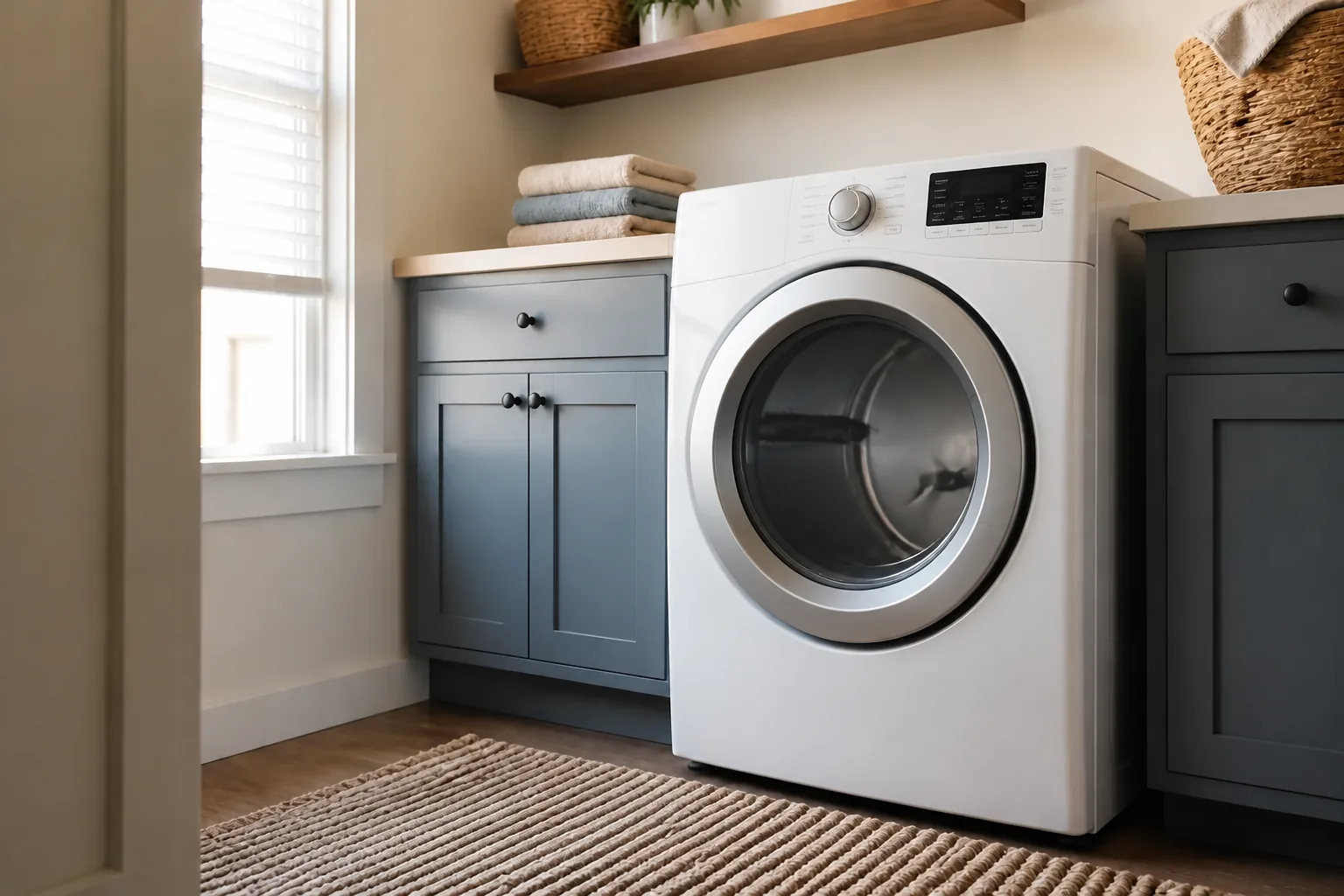
What to know first
Routine dryer care helps air move through the machine and household vent. Good airflow can shorten drying time, reduce heat buildup, and make changes in performance easier to notice.
Homeowners can handle a few cleaning and visual checks. Internal electrical, heating, drive, and gas components should be inspected or repaired by a trained technician.
Safety first
Unplug an electric dryer before moving or cleaning around it. Do not disturb a gas connection. If you smell gas, leave the area and contact the gas utility or emergency services from a safe location.
Clean the lint screen after every load
Remove visible lint before starting the next cycle. If fabric-softener residue has coated the screen, clean it according to the dryer manufacturer's instructions and let it dry completely before reinstalling it.
Watch the complete exhaust path
- Keep the outdoor vent hood clear and confirm that it opens while the dryer runs
- Avoid crushing or sharply bending the duct behind the dryer
- Arrange professional vent cleaning when lint buildup or restricted airflow is suspected
- Stop using the dryer if you smell burning or see scorching
Notice changes in sound and drying time
Squealing, scraping, thumping, repeated shutdowns, or clothes that need several cycles can point to airflow, roller, belt, motor, sensor, or heating trouble. A new symptom is worth addressing before continued operation causes more damage.
Keep the dryer stable and accessible
A level dryer places less strain on moving parts and reduces vibration. Leave enough space behind the appliance for the duct and power or gas connection without pressing them against the wall.
Need a diagnosis?
RPS Appliance Repair can test the appliance, explain what failed, and provide a flat-rate repair quote before work begins. The $129 trip and diagnostic charge is waived when the repair is approved.