Timed and sensor cycles
Timer, moisture sensing, temperature control, and cycling behavior are checked for the dryer design.


Whirlpool dryer repair
When a Whirlpool dryer will not start, heat, or finish a load efficiently, RPS checks the heat, drive, airflow, power, and control systems.
What the symptom can mean
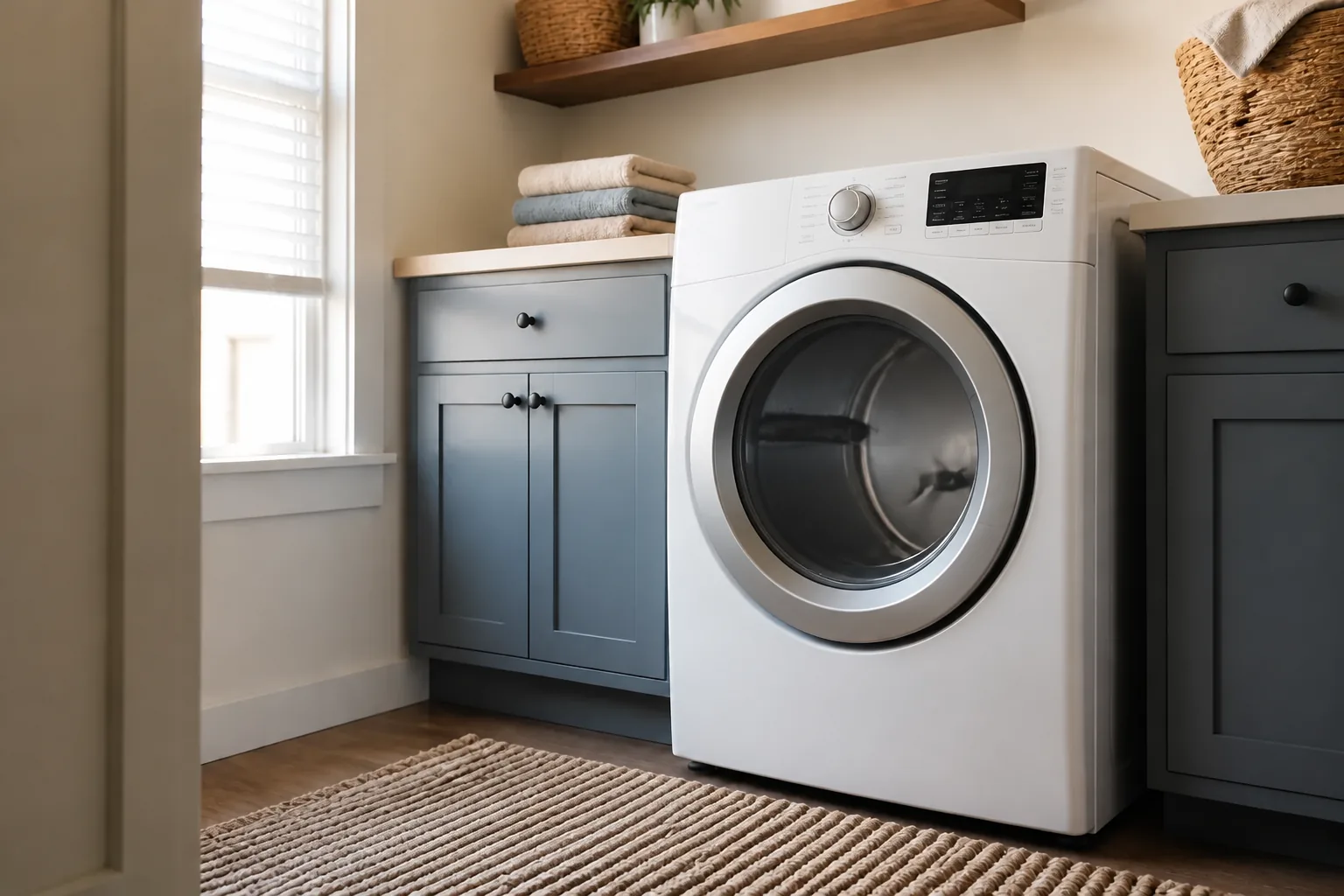
Whirlpool dryers range from straightforward timed models to electronic sensor-dry designs. All still depend on correct power or gas supply, safe heating, drum movement, and exhaust airflow. We test the symptom on the exact configuration and identify any vent condition that must be corrected separately.
How we narrow it down
Timer, moisture sensing, temperature control, and cycling behavior are checked for the dryer design.
Motor, belt, idler, rollers, drum movement, and switches are evaluated when starting or noise is the concern.
The dryer connection and signs of restricted household venting are reviewed when heat or dry time is abnormal.
Find the model number: Look around the dryer door opening for the full model and serial label. Confirm whether the unit is gas or electric.
Straight answers
An electric dryer can tumble with incomplete incoming power. Heating components, gas ignition, safety devices, airflow, wiring, and controls are also possible causes depending on the model.
Restricted exhaust is common, but low heat, incorrect cycling, moisture sensing, load conditions, or internal airflow can also extend drying. Testing separates the dryer problem from the building vent.
Stop using the dryer if it smells hot, scorches clothing, repeatedly stops from heat, or shows signs of restricted exhaust. Excess heat should be diagnosed before another load is run.
From our technicians
Real symptoms, repair findings, and the checks we made before finishing the job.
A Whirlpool dryer in Spanaway would not start or tumble due to worn timer contacts. The technician diagnosed the issue, replaced the faulty timer, and tested the dryer to confirm proper operation.
Read the repair story →South Prairie, WAWhirlpool dryer noise resolved in South PrairieA Whirlpool dryer in South Prairie, WA, was making unusual noises during operation due to debris caught in the front bulkhead. The technician removed the debris and tested the dryer to confirm proper operation.
Read the repair story →Graham, WAWhirlpool dryer noise fixed with roller and idler repair in GrahamA Whirlpool dryer in Graham was making noise during operation. Inspection found failed rear rollers and a worn idler pulley, and both were replaced before the dryer was cycle tested.
Read the repair story →Save on your next repair